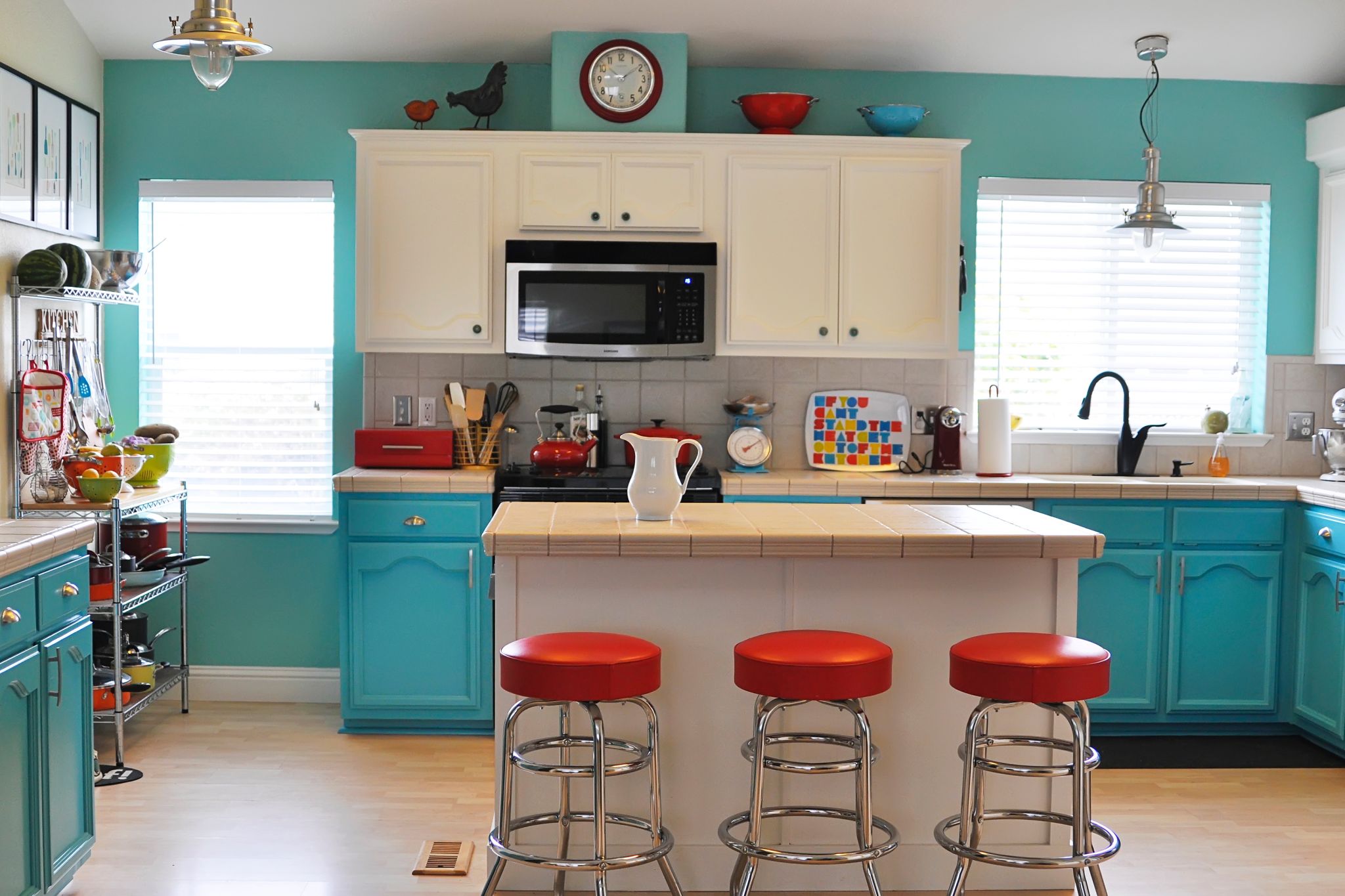

With kitchen trends, it’s easy to get swept along with what’s in vogue, only to get bummed out by faddish design choices a few years later. Thank you — and damn you — Pinterest.
But chances are you’re only going to remodel your current kitchen once. After all, a complete kitchen renovation costs an average $80,000, according to the "Remodeling Impact Report" from the National Association of REALTORS®. With that much on the line, you want to make all the right moves. If you do, you could recover about 75% of your investment if you sell.
So we’re here to future-proof you from angst by naming seven kitchen features that are likely to retain their beauty, marketability, and value — all while giving you lasting enjoyment.
#1: White is Still a Popular Color
Bottom line: White is a marketable color. It's usually close to the top of the National Kitchen and Bath Association’s annual survey of most popular kitchen colors. It simply doesn’t go out of style.


- Throughout history, it’s been associated with happiness, purity (think Snow White), and new beginnings.
- It’s a bright color that reflects light and makes even small kitchens feel larger.
- It’s a dream for the extremely clean — dirt has nowhere to hide.
Even better, it’s uber-tolerant of both your budget and taste: A standard color for any manufacturer, you’ll find white cabinets, tile, counters, faucets, sinks, and appliances at any price point.
Related:
- Why You Should Avoid Painting Your Kitchen Your Favorite Color
- Before and After Pictures of White Kitchens
And with a white backdrop, you can be as conservative or expressive as you want. After all, it’s about your enjoyment, not just dollars and cents. For example:
- Add your personal touch with colored glass knobs and pulls.
- Show off antique Fiesta ware on open shelves or in upper cabinets with glass fronts.
- Paint walls the color du jour — even off-white!
Heck, with a white palette, you can change your mind about paint color on a whim. Those all-white basics will make any hue you choose look fresh and contemporary.
#2: Hardwood for Flooring
It’s been our foot fetish for years. That’s especially true ever since hardwood flooring was mass-produced during the Industrial Revolution, making beautiful flooring readily available at a reasonable cost.
“It’s the one feature men and women agree on,” says Debe Robinson, owner of Kitchen Expressions in Sheffield, Ala., who’s also worked in the flooring industry.
Why? The love of wood is in our genes. Our nesting instincts know that hardwood has warmth and personality, and makes our homes cozy and inviting. That’s why this clever chameleon pairs well with any kitchen style — from casual cottage and sleek contemporary to the most chichi Park Avenue traditional.
More reasons why wood flooring is a goof-proof option:
Perfect for open floor plans. It flows beautifully from the kitchen into adjoining rooms.
It’s tough. Hardwoods such as oak, ash, and maple will shrug off your kitchen’s high-traffic punishment for years. Solid hardwood flooring can be refinished 10 to 12 times during it’s typical 100-year lifespan.
It’s eco-friendly. Hardwood is considered a green building material when it’s certified by the Forest Stewardship Council and comes from sustainably managed forests.
Related: The Best Choices for Kitchen Flooring
#3: Shaker Style for Cabinets
Thank heaven for the Shakers. While they were busy reducing life to its essentials, they made cabinets with clean, simple lines that will forever be in style.
Shaker cabinets are an enduring legacy of American style and, like wood flooring, have a knack for looking good in any setting. Their simple frame-and-panel design helps reduce a busy look in a kitchen, making it a soothing, friendly place.
“In a kitchen with a timeless look, you want the cabinets to be part of the backdrop,” says Alan Zielinski, president of Better Kitchens in Niles, Ill. “You don’t want to be overpowered. You’re looking for plain, simple, clean lines.”
Those lines are a perfect fit for transitional style — a beautiful combo of traditional and contemporary styles. As our families grow more diverse, transitional style lets us personalize and blend cultural influences — Latin, Asian, Middle Eastern — into our homes. It’s the perfect balance of old and new, just like Shaker-style cabinets.
Related: How to Choose Kitchen Cabinets for the Best Value
#4: Carrara Marble for Countertops


Carrara marble is a timeless classic that’s been used in homes for thousands of years. (Michelangelo’s “David” was carved from Carrara.) It’ll look as good in the next millennium as it does now.
Here’s why:
- Carrara’s lacy graining and subtle white colors look terrific in a white kitchen (or any kitchen, for that matter).
- It has a whiteness you won’t find in other natural stones.
- It’s readily available, making it less expensive than other high-end choices, such as quartz.
- It’ll last for generations.
If you Google it, you’ll find a lot of debate about it (and marble in general) because it stains easily. But if you want something truly timeless, Carrara is the answer. And with today’s sealants, the problem of staining is almost nonexistent if you reseal once or twice a year.
Related: How to Get the Look of Marble Without the Cost
Still not sold? Or don’t have the budget? Laminate countertops are relatively inexpensive and can be upgraded to stone when you do have the budget.
#5: Subway Tile for the Backsplash


Subway tile goes back to the early 1900s, when it was used to line New York’s first subway tunnels. Classic subway tiles are white, three-inch-by-six-inch rectangles — a look that became popular in American kitchens and baths, and has stuck around ever since.
In the kitchen, ceramic tile excels as a backsplash, where it guards against moisture, is a snap to clean, lasts forever, and looks classy.
Sure, a backsplash can be an opportunity for a blast of color and pattern, but neutrals will always be current and blend with any look. Plus, a subway tile backsplash and a marble countertop make a dashing couple that will stand the test of time.
To make it even more enduring, keep it achromatic and camouflage dirt with gray or beige grout.
#6: Ergonomic Design
Adaptability and universal design features mean easy living at any age. Smart ergonomics is simply convenience — for young or old, party people or homebodies — a key factor when remodeling a kitchen that will function well, retain its value, and always feel right.
No matter what your or your buyer’s current or future needs are, everyone wins with these approaches:
Create different countertop heights. Standard height is 36 inches, but you can raise or lower sections of cabinets by altering the height of the base. Add color-match shim strips to the bases of countertops that don’t include sinks or appliances. You (or a new owner) can easily remove them or add to them to adjust the height.
Swap a standard range for a wall oven and a cooktop. Ranges have fixed heights. There’s no getting around the fact you have to bend to access the oven. But a wall oven conveniently installs about waist-high.
Add pull-out shelves to base cabinets. Lower cabinets with doors mean having to twist like a pretzel to see what’s inside. Pull-out shelves put everything at your fingertips.
Keep wide clearances. Kitchens attract people, and with open floor plans, you’re apt to have folks hunting for snacks, helping you cook, or just hanging out while you prep meals. Keep traffic flowing with a minimum of 42 inches between counters and islands.
Related: 5 Kitchen Layout Ideas to Avoid
#7: Smart Storage
Kitchens have evolved from a tucked-away place at the back of the house into a multiple-chef, multitasking space that’s the hub of family life. That, plus our love of open kitchens and stocking up at warehouse stores, means less wall space and more stuff, says Robinson.
The solution: smart storage. Cabinet manufacturers have you covered with nearly unlimited storage options — shelves and compartments that unfold, turn, extend, and slide.
But it’s not just about having storage; it’s about designing it smartly. Follow these guidelines to make your storage timeless:
Create a primary storage zone. This is an area 30 to 60 inches high and within two feet on either side of your body. Store your most-used items here — your favorite work knives, measuring cups, salt and pepper for cooking, your trusty pots and pans. With one easy motion, you can grab what you use all the time.
Plan for the unknown. A truly timeless kitchen anticipates and adapts to future needs, such as:
- A space that can easily convert to an office, wine storage area, or a closet.
- Lower cabinet spaces that can accommodate a wine cooler, under-counter refrigerator, a second dishwasher, or new must-have kitchen appliances on the horizon.
- An open space that fits a freestanding desk or favorite antique that can personalize the kitchen — no matter who owns the home.
Related: