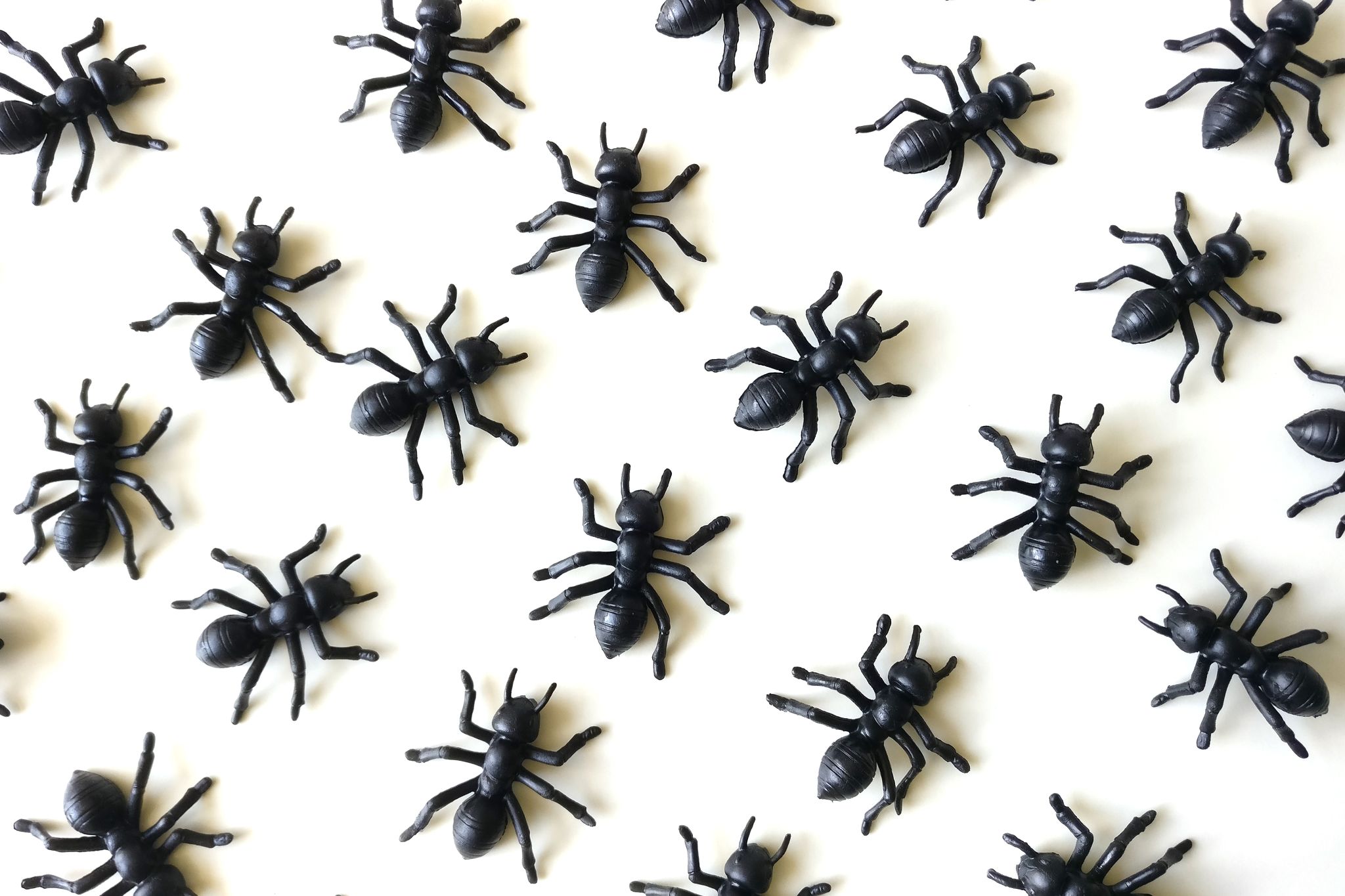

Summer brings out the creepy-crawlies: Ants marching one-by-one toward your kitchen, fruit flies swarming your ripe farmers' market peaches, and wasps sending you and your guests scrambling from the barbecue.
Don't panic. You can kill bugs in your house naturally — without expending too much effort, as long as you follow these expert-approved do's and don'ts.
#1 Keep Ants Out By Sealing Up Their Entrance
These pesky crawlers form a beeline — or an antline, if you will — to any "sugary, sweet substances, crumbs on your countertop, and food spillage on the floors," says Nancy Troyano, Ph.D., a board-certified entomologist and director of technical education and training at Rentokil North America Pest Control. "That's exactly what they're going after."
Do: Follow their trail to spot and seal any sneaky entrances.
Don't: Spray ants with cleaners or combine borax and powdered sugar to poison their food source.
Foraging ants lay a trail of pheromones to food their family can follow. Cut off their food supply by keeping your space spotless — wipe up spilled apple juice on your countertops, and clear the crumbs from the bottom of your trash bin.
If you do spot their tiny parade, Troyano says to grab a tube of sealant and follow the ants until you find their itty-bitty entrance.
Attacking them head on rarely works — and can even make it worse! Who hasn't picked up a spray bottle of cleaner and led an all-out assault on those pesky bugs?
Turns out spraying them with household cleaners might kick-start the "budding" process, where surviving ants break away to form new colonies — and breed lots of new ant babies.
Combining sugar and borax is another DIY method that hurts more than helps. While borax will kill the ants —though it's also an irritant that can be toxic to pets — the sugar "may end up attracting ants that wouldn't have been there in the first place," Troyano says.
#2 Ban Roaches By Super Cleaning or Calling a Pro
These nasty crawlers are "nocturnal and secretive in nature," says Troyano. Even worse? They travel in groups. "If you spot one, it's searching for food because the other roaches are eating all the rest," she says.
Do: Scrub your space and lay out commercial-grade roach traps as soon as you spot one.
Don't: Try to handle an infestation solo. Call a professional exterminator if you've spotted more than a roach or two.
When it comes to cockroaches, pros know best.
"Roaches hide so well in such tiny cracks and crevices and niches," Troyano says. "Unless you're trained to think like the roach, it's very difficult to be able to get them all."
While store-bought roach traps and bait can help, two steps are mandatory to truly kill an infestation:
- Remove any food sources, like hamburger grease and crumbs.
- Then hire an exterminator.
If you've got an infestation on your hands, or you can't tell if the one roach you caught has friends lurking somewhere, "you absolutely need to call pest management," Troyano says. "Roaches aren't something home remedies will fix."
#3 Stop Wasps by Killing Them and Removing Their Home
The worst of the worst when it comes to warm weather pests, wasps are difficult to prevent and a pain to kill — literally, as you might suffer a sting or two in the process.
Do: Kill the queens early and stock up on aerosol insecticide spray if you and your environment can handle the toxins. Wasp traps are a safer alternative, but the bugs will keep coming back if you don't remove their home.
Don't: Destroy nests during the day or plug the entrance to a yellow jacket nest.
Residential backyards are most commonly home to either yellow jackets or paper wasps. Queens of both species tuck away in your yard, wood piles, or any other small holes during the winter and emerge in search of a home for their next colony when the weather warms.
If you spot a single, solitary wasp wandering your yard, don't feel any shame in cold-blooded insect murder.
Troyano found two wintering yellow jacket queens in her picnic table umbrella, both ready to start hunting for a new nest.
"I didn't give them the chance to do that," she says. "I prevented two colonies from forming."
To kill a single wasp or an entire nest, Troyano recommends aerosol insecticide.
If you're concerned about toxicity — these sprays typically include pyrethrins, which can cause respiratory problems if used incorrectly — hire an exterminator.
If you're brave enough to tackle a nest yourself, only do it at night when all wasps are back and sleeping. Stand as far away as the spray allows (most work from 20-plus feet) and wear thick, full-coverage clothing. Plan your escape route before spraying.
Of course, hiring an exterminator is safer — and necessary in some cases. Yellow jacket wasps like to build nests underneath siding. Some homeowners might be tempted to starve them out by plugging the entrance, a horrendous mistake.
"Yellow jackets are chewers," she says. They'll chew through the other side of their nest to get inside your house. "Every year, we get calls from frantic people because they see a soft, wet hole in their drywall, and they'll poke it, and yellow jackets come spilling out," Troyano says.
#4 Control Mosquitoes by Removing Their Breeding Grounds
Not only can these summertime snipers ruin your barbecue and session-beer tasting with their incessant biting, they can also dose you with Zika or West Nile virus.
Do: Get rid of any standing water, which is their breeding ground, or treat the water with a larvicide.
Don't: Don't use any pesticide with methoprene, which can harm fish and pets, and never apply pesticides to drinking water.
Don't let mosquitoes make babies on your watch. That's your No. 1 defense against them. Check birdbaths, storm drains, potted plants, any place water can collect, then dump any you find. Mosquitoes only need one or two weeks to breed, so hurry!
Can't dump it out? Treat standing water with mosquito-fighting granules or briquets, larvicides that kill bugs before they start biting. Look for products containing Bti, not methoprene, which is toxic to fish, causes vomiting in some dogs, and can irritate your skin.
To keep them from attacking you when you're relaxing on your back porch, simply blow them away. Literally. Their tiny, evil bodies can't fight even the slightest breeze. A simple fan will do the trick (but a ceiling fan would be way cooler!).
#5 Trap Fruit Flies With Vinegar
Summer brings these frequent fliers in droves, and nothing seems to keep them away. They might even be catching a ride inside with you. That's because grocery store produce can serve as tiny Trojan horses stuffed with fruit fly eggs ready to hatch.
Do: Clean your kitchen and use vinegar traps to snag stragglers.
Don't: Bother trying to seal them out.
The best way to keep your home fly-free is by cleaning up what Troyano calls "secondary environments," like your garbage disposal or trash can and putting all of your food in the refrigerator immediately.
That may be a tough call for foodies who are loathe to ruin their heirloom tomatoes in a chilly fridge. Cleaning the produce bowl daily and removing any food with broken skin can stave off flies, but Troyano says putting everything away is the only fail-safe.
Even after a thorough scrubbing, you still might find a few little guys hovering in your kitchen. A homemade trap, created by placing a small amount of cider vinegar in a jar and covering it with plastic wrap punched with a few holes, can help eliminate the flies' last stand.
Unlike ants, you can't seal your home from fruit flies. Because they're only a few millimeters long, they can even squeeze through screened windows.
Related: How to Stop the Smells and General Funk That Invade Your Home