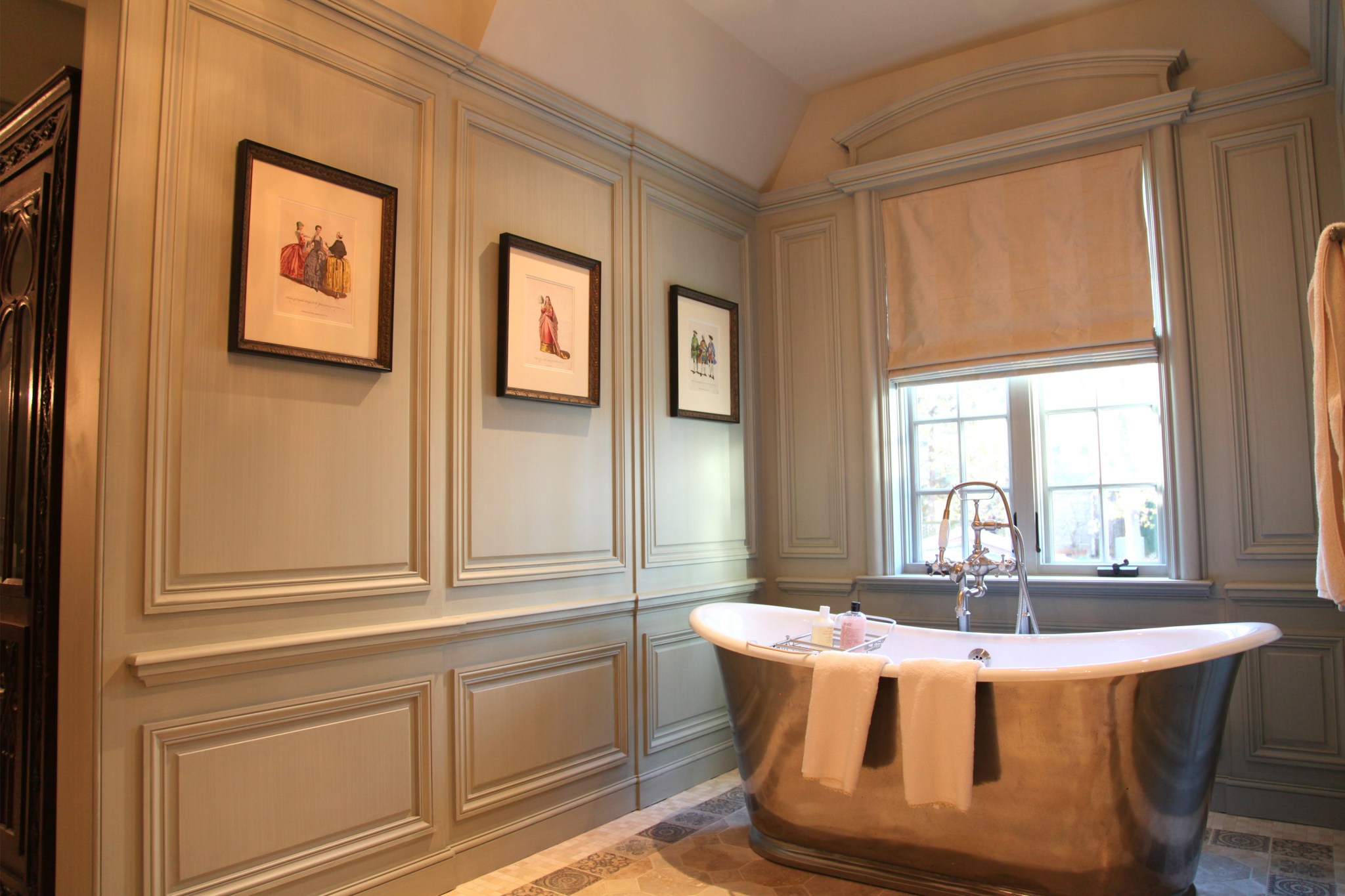

Chair rail molding is a nice touch that adds a sense of refinement and proportion to rooms, especially if you’re planning to add crown molding, too.
But many folks make the mistake of putting the chair rail at the wrong height -- a mistake that can make a room feel lopsided and out of proportion.
“Moldings are sending you messages,” says Brent Hull, an author and molding expert. “Their purpose is to establish the scale and proportion of a space. And no molding does this job better than chair rail because it visually divides the room and instantly allows you to read the size and scale of the space.
The Myth About Chair Rails
The popular myth is that chair rails protect walls from damage caused by the backs of chairs.
The truth is that architects as far back as the ancient Romans and Greeks used chair rails and wood trim to divide walls into visually pleasing proportions, often with different colors to accentuate scale.
By the way, the name “chair rail” came into popular usage with the Shakers, who installed boards with pegs on dining room walls to hang chairs off the floor for sweeping and cleaning.
Correct Height for Chair Rail Molding
Most experts place chair rails at one-third the distance of the ceiling height. For a standard 8-foot ceiling, they should be installed about 32 inches from the floor. Hull cautions that most people install chair rails too high on their walls.
“About 28 to 32 inches is an optimum range for chair rail height,” says Hull. “Lower is always better than higher. For me, a good rule of thumb is to install chair rail molding at 25% of the height of the room. In a room with a 10-foot-high ceiling, the chair rail should be 30 inches off the floor.
Chair Rail Size and Cost
A good baseline width for a wood or composite chair rail molding is 2-3 inches. Chair rail molding is available in other materials, such as metal, polymers, and vinyl.
Depending on the width, complexity of design, and type of material, expect to spend from a few dollars up to $100 for an 8-foot length.
And if you’re going through the trouble of installing chair rails, crown molding can complete off the look. Of course, you could opt for something entirely different.
"If you’re a Modernist, you don’t even have to have a chair rail molding," Hull says. "Simply use paint color to divide the wall, but follow human scale on where one color ends and another begins."
Related: