
People -- especially those who live in cold climates -- are undeniably attracted to wood- and gas-burning fireplaces. But you need to clean your fireplace regularly to prepare for the fall/winter burning season. That way, your fireplace will function safely and efficiently.
Why Do You Need to Clean Your Fireplace?
Burning even the driest firewood will lead to soot and creosote buildup on the flue walls lining the chimney. Because these byproducts are flammable and dangerous, they must periodically be removed. Creosote buildup is the leading cause of chimney fires. In addition, a dirty chimney can release carbon monoxide and other toxic gases.
How to Clean a Wood-Burning Fireplace
Keeping a wood-burning fireplace clean begins with the wood you burn. If you use only properly seasoned and stored firewood, you'll help prevent creosote buildup.
Ash Removal
You need to remove wood ashes only when they begin to smell or interfere with building a fire. To remove them, simply shovel them, put them in a bag, and put the bag in the trash.
If your fireplace has an ash dump, push the ashes through the metal plate in the floor of the firebox. Then vacuum the remaining ashes in the firebox and on the hearth.
Here's a heads up: You’ll want to wait at least 72 hours after your last fire before attempting cleanup. That way, you won’t put any hot coals in the trash, where they could start a fire.
Also, don’t send hot or warm coals down the ash dump, because they can ignite a fire in the walls.
Smoke and Soot
Poor drafting -- caused by a clogged flue (and forgetting to open the flue damper!) -- can cause smoke and soot to build up on the fireplace surround. That's the area around the fireplace opening. Arm yourself with gloves and use a stiff brush to clean the surround with a masonry cleaner.
If your fireplace has glass doors, clean the inside and outside with a standard glass cleaner or a homemade green window cleaner.
How Often Should You Get a Professional Fireplace Cleaning?
“If you burn a fire about once a week throughout winter, you should have your chimney inspected annually and professionally cleaned every other year,” explains Gary Spolar, a licensed chimney sweep who owns Century Chimney in Ohio. Heavy users might require professional cleanings every year, he adds.
Regular chimney maintenance ensures warmth and safety, so the cost is worthwhile. A basic chimney inspection and sweep for a fireplace with a single flue costs $149 to $185. Routinely maintained wood fireplaces cost $89 to $155 per cleaning, and those with heavy creosote buildup or neglect cost $300 or more. Chimney cleaning kits sell for $50.
Beware of store-bought fireplace logs promising to remove creosote buildup when you burn them. The Chimney Safety Institute of America says, “The use of these products alone is not an adequate substitute for mechanical chimney cleaning and inspection, because it does not provide for the same level of protection to the chimney system.”
How to Clean Gas Fireplaces

We love gas fireplaces because they’re low-maintenance -- but that doesn't mean they’re no-maintenance.
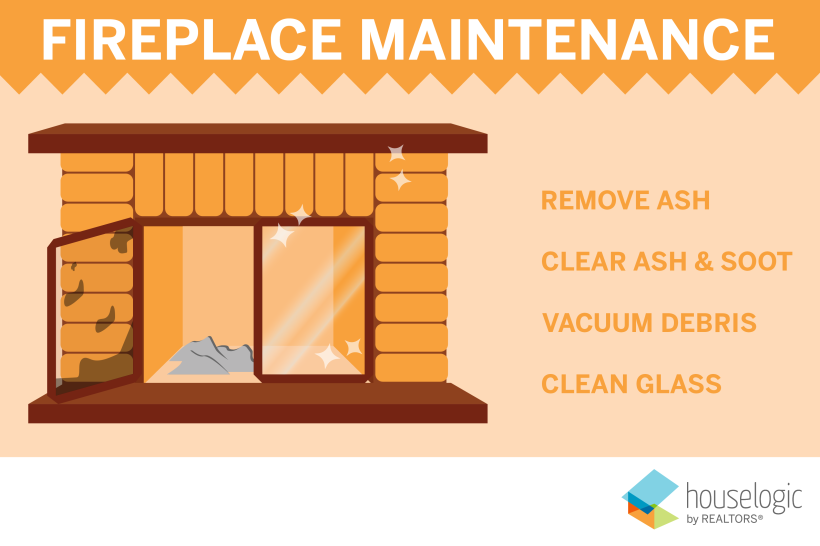
- Turn off the gas before attempting to clean a gas fireplace.
- Remove (if possible) and clean the glass doors with a non-ammonia-based glass cleaner or homemade vinegar solution.
- Use a vacuum to clean any debris inside or around the vents of the heat exchanger if one exists.
- Be sure to position gas logs properly.
Related: