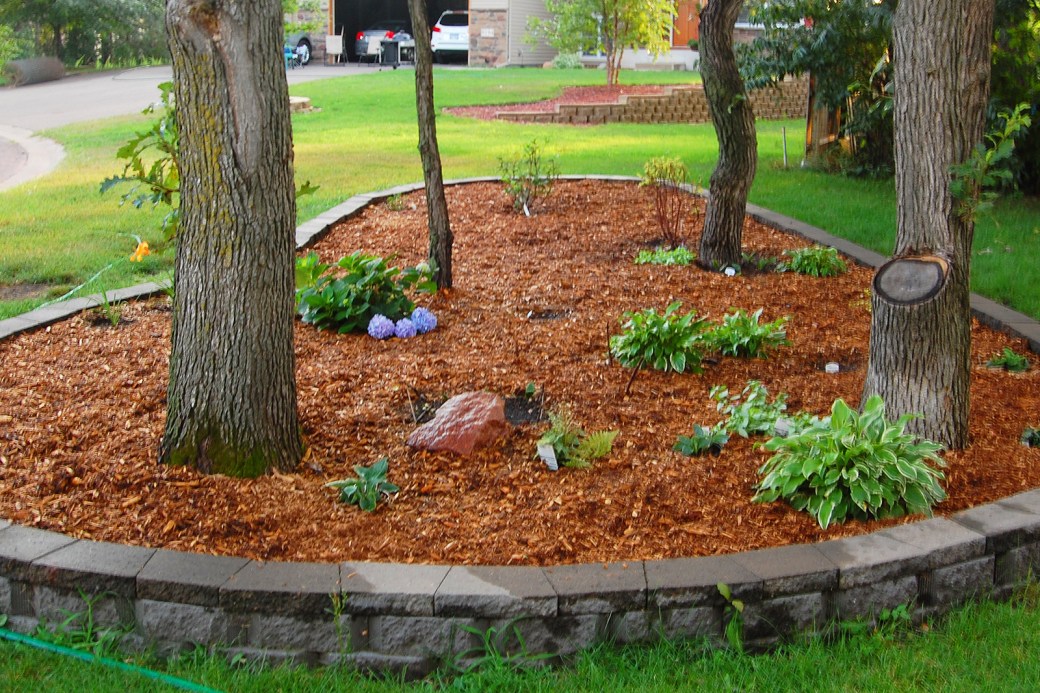

Mulching your garden is like flossing your teeth -- preventative, tedious, and vital to health. Luckily, you don’t have to mulch after every meal.
But you should blanket your garden beds at least twice a year -- in early spring and late fall -- to retain moisture and keep down weeds. That’s why it’s so important to learn how to mulch correctly.
How Much Mulch Do I Need?
If you’re a numbers geek, try this method:
To determine how much mulch you’ll need, multiply the length and width of your garden space (in feet) by the mulch height (about 3 inches, or a quarter of a foot) to get total cubic feet.
Bagged mulch is sold by the cubic foot. To figure the number of bags, divide total cubic feet by the number of cubic feet in each bag.
Bulk mulch is sold by the yard. To figure the number of yards, divide the total cubic feet by
27 (there are 27 cubic feet to 1 cubic yard).
Bags or Bulk?
It depends on what’s more valuable to you -- time or money.
If you want to save money, then bulk is the way to go. In Virginia, for instance, shredded hardwood mulch in bags costs about $50 per cubic yard; bulk is $30 per cubic yard -- about a 40% savings.
Also, delivering bulk mulch, where trucks just dump and run, is about 25% less expensive than delivering bags, which someone has to drag and stack.
If you want to save time, mulch by the bag is for you.
- Bags are easy to carry to and spread on garden beds. Just rip and dump.
- Extra bags are easily stacked and stored.
- You don’t have to sweep up after a bag delivery; you will after a bulk delivery.
How to Put Down Mulch
Spreading mulch isn’t a NASA launch: Precision is not required, says Kevin Warhurst of Merrifield Garden Center in Virginia. But you must follow a few guidelines.
1. Pile on 2 to 4 inches of mulch. If you mulch regularly, and several inches have built up, add only 1 inch as top dressing, or remove all mulch, and start fresh. Too much mulch can trap moisture and cause rot, or prevent water from reaching roots.
2. Never pile mulch next to a tree or shrub trunk, which can cause wood rot and foster insect and fungus problems.
3. Get rid of weeds. Put down a pre-emergent herbicide, newspaper, or landscaping paper before mulching.
4. Spread mulch by hand, which gives beds a neat and finished look. If you must use a tool, use a pitchfork, good for moving mulch into and out of the wheelbarrow. Move the tool side to side to even out mulch. Or, use the back of a steel rake to smooth out the mulch. (Tip: Use a snow shovel to move bulk mulch from pile to wheelbarrow.)
5. Never leave mulch on lower branches and leaves, a telltale sign of careless work.
Want Free Mulch?
Learn how to mulch leaves that overwinter on your lawn and pile up during fall. Leaves make an excellent garden mulch, or rig your mower for mulching and chew them up to feed your lawn.