
No matter where you live, why not celebrate spring by making some landscaping changes? You don't need to invest a lot of time or money. To give your yard a dose of charm without a ton of effort, try these four spring landscaping ideas.
You'll boost your curb appeal for sure.
#1 Plant Just One Tree
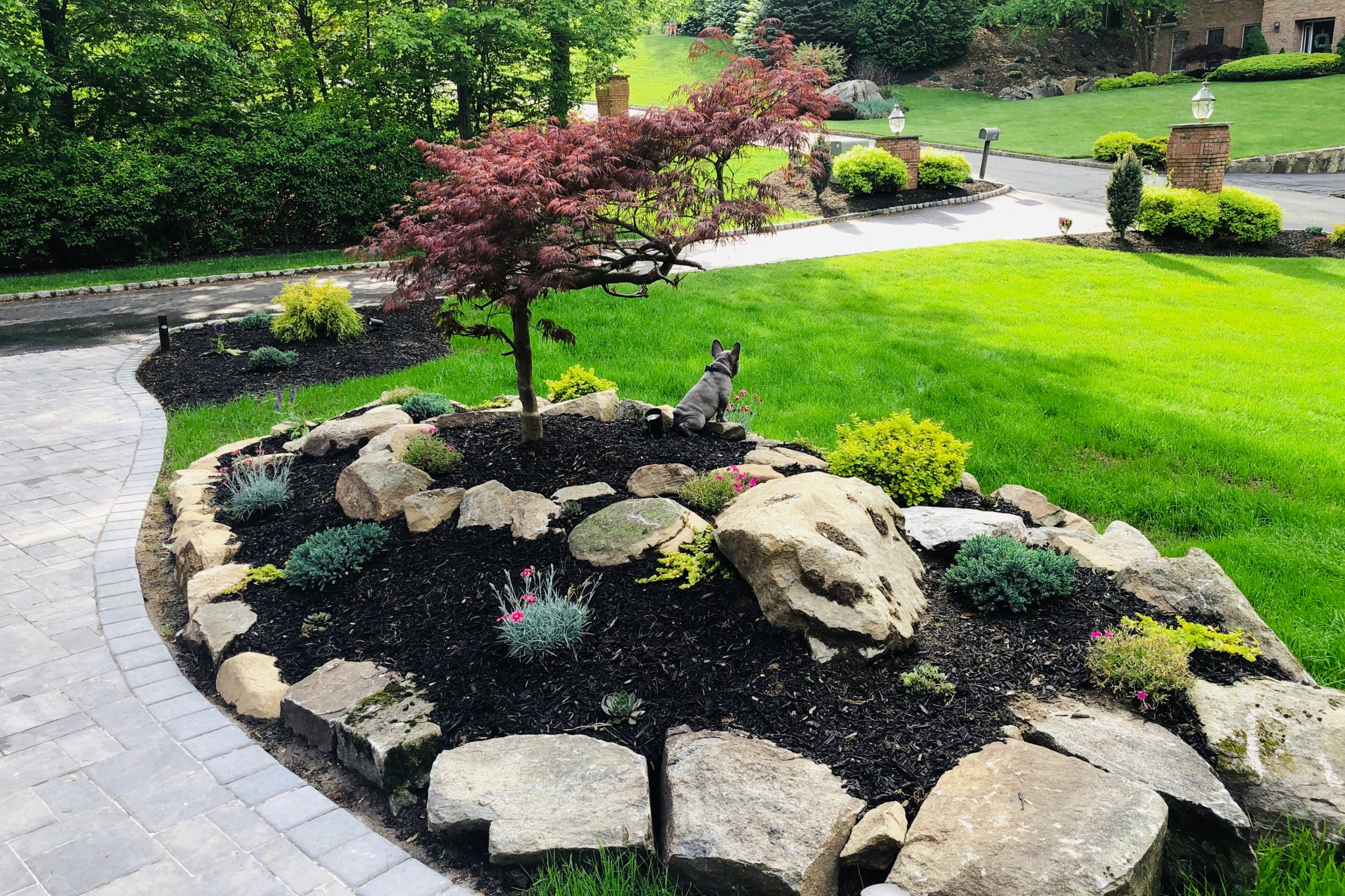
Planting one tree isn't a huge effort, but it's one of the best projects you can take on for your spring landscape. Plus, once the tree is established, it's about as low maintenance as a landscape can get, and the difference it can make to your yard lasts for decades. The key is to choose a tree that adds interest to your landscape in the form of color, shape, and texture.
There are a ton of trees to choose from, but if you want to play it safe, try a Japanese maple. Many are suitable for most any climate. They all offer color, form, and texture that can liven any landscape.
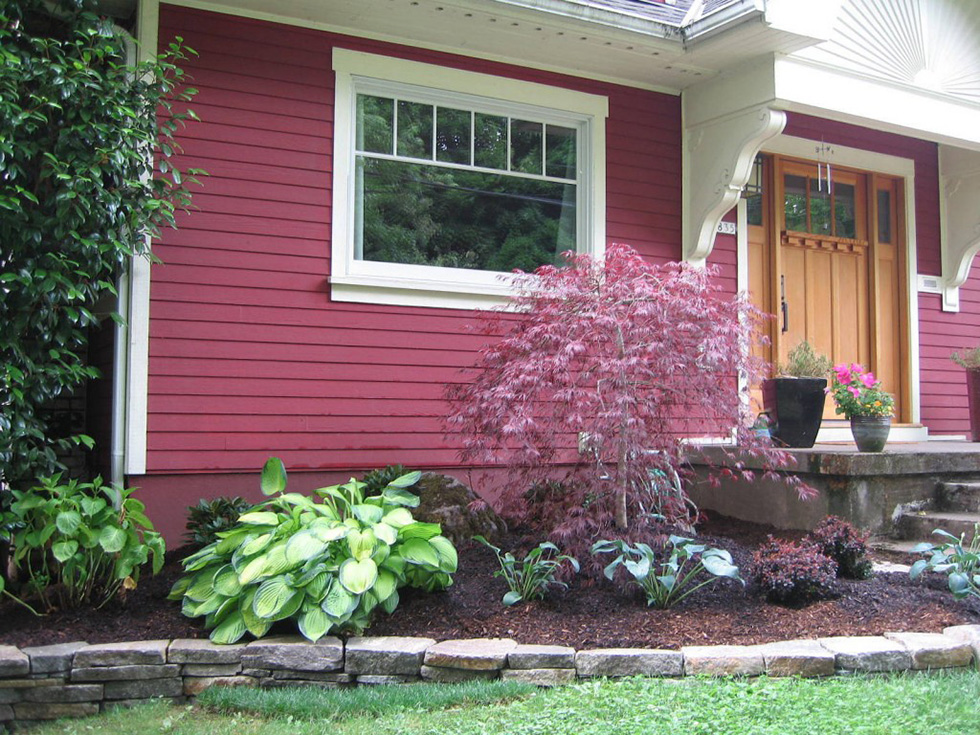

One, the Mikawa yatsubusa, is a dwarf version that changes colors in the fall, resembling a tie-dye shirt. You won't be lacking color then!
Related: 11 Trees You Should Never Plant in Your Yard
#2 Add a Color Punch With Mulch
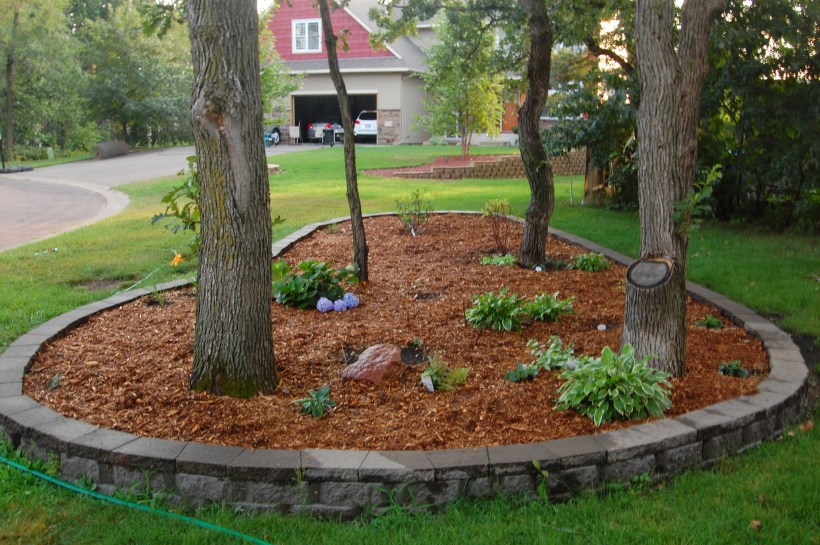

Mulch is one of the easiest ways to add both color and texture to the entire yard. "Next to a green lawn, coffee bean-colored mulch is a great contrast," says Paul Fraynd, owner of Sun Valley Landscaping in Omaha, Neb.
If a dark roast isn't your preference, there's a a multitude of mulch colors that can spice up your bland landscape. Red, black, gold, cedar-toned — you choose.
For something different, try pine cones. They introduce a knotty texture that breaks up the monotony of flat lawns and box-like shrubs.
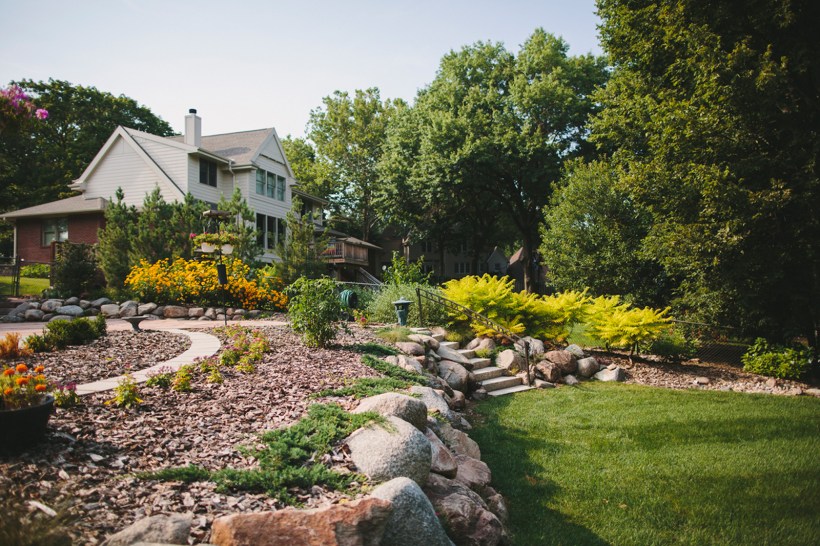

The point is that mulch is easy: Choose a cool color and texture, then dump it, spread it, and forget it.
"Keep it away from wood or siding, though," warns Fraynd. "It can rot the wood and may attract insects."
#3 Add Some Edging
Look along your walkways and garden beds. If your lawn just seems to morph into your shrubbery or threatens to take over your front walk, some interesting edging could perk up your yard. No pruning, cutting, or watering required.
Define a walkway with some personal or found items, says a public affairs executive for the National Association of Landscape Professionals.
Colored hockey sticks can line a path or wine bottles planted neck down in the soil, says the NALP. Just make sure you do the entire path. Two or three wine bottles lining a path might look like leftovers from last night's party.
If you want to keep it all in the plant world, low-maintenance ground covers are an excellent choice for edging, according to the NALP. Try lily of the valley, vinca, lamb's ears, or pachysandra. Some add color, and others add texture.
#4 Create a Focal Point That's All About You
Your own passions and pleasures are great inspiration to add color and texture to your spring landscape. Try creating a focal point with something that brings back a happy memory, like your old toy truck, tricycle, or wagon, says the NALP. Turn it into a colorful planter.


Or opt for hard nongardening materials to contrast with the softness and monotony of nature's green. "Make a table using an oversized flower pot or lobster trap filled with something that represents your passion — golf balls, sea shells — and cover the container with a wood or glass top," says Fraynd. "These can be fun to talk about and give a unique personality to your yard."
Your yard is a reflection of you. You're not one-dimensional. Your yard shouldn't be either.