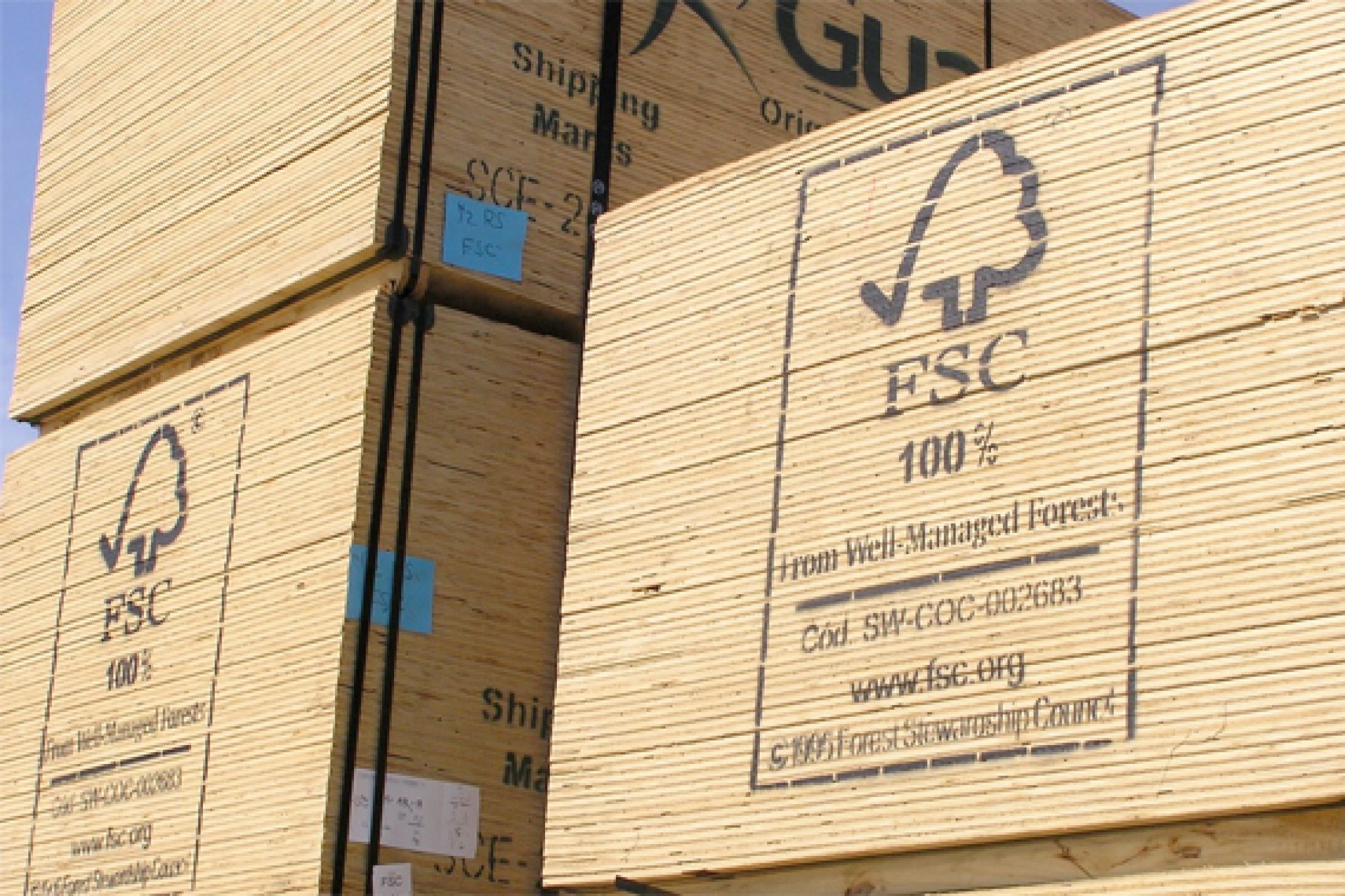

If sustainability is important to you when you remodel a kitchen or bathroom or build a deck, look for the Forest Stewardship Council (FSC) certification. It’s the best indicator, here in the U.S., that the wood used to make your cabinets, countertops, deck, and more was harvested sustainably.
The Sustainable Forestry Initiative (SFI) certification is helpful, too, though less rigorous. It’s a good bet when you can’t find FSC products.
Both certifications tell you whether a wood product comes from a forest that’s managed responsibly.
Responsible forest management
It includes:
- Protecting fragile ecosystems
- Respecting native cultures and economies
- Preventing illegal logging
- Restricting clear-cutting (removing all trees in a tract) and pesticide use
- Monitoring the "chain of custody," or ensuring that the wood in the product you're looking at really came from the forest that was certified.
Where to find certified wood
Ask your retailer or cabinet maker up front about their certified wood options, and whether any are ready made. You can also use FSC or SFI's online products database to select a retailer that carries certified wood.
Is certified wood more expensive?
The frustrating answer is maybe yes, depending on efficiencies in the supply chain, or maybe no, such as if FSC-certified suppliers, for instance, are competing with wood that’s been harvested irresponsibly. FSC recommends you do comparison shopping among local suppliers and online.
Forest Stewardship Council = the gold standard
FSC is widely considered the best forestry certification program, although industry groups tend to consider it too strict—and environmentalists, too lax. The nonprofit was started by environmental groups in 1993.
Most agree FSC is a stronger certification than SFI, although to what extent is debatable, as both have downsides. FSC has very specific criteria for what constitutes responsible forest management, placing a big emphasis on environmental health. FSC certification is tougher than SFI in several categories, including how much clear-cutting is allowed and how much chemical pesticide can be used.
Downside of FSC: Because it’s harder to achieve, it's harder to find in the store. But it’s worth the extra effort, because consumer demand can help it spread to a broader audience. Just allow yourself some extra time to locate products, says BuildingGreen, a company that educates building professionals on green certifications.
Sustainable Forestry Initiative less rigorous
SFI has its roots in the logging industry, as an outgrowth of the American Forest and Paper Association, from which it still receives funding despite the fact that it's now a separate nonprofit. Because it takes money directly from the industry it polices, and because its certification process isn't as transparent as FSC's, you could reasonably doubt whose interests come first.
Still, SFI has toughened its standards over the years, including prohibiting logging of old-growth forests and limiting chemical pesticides. BuildingGreen deems it an acceptable solution when you can't find FSC products.
Caveat about green certifications for wood products
Forestry certifications aren't the final word on wood. Consider whether the whole package—everything that makes up those cabinets—is really green:
- Glues
- Paints
- Finishes
- The distance it has to be shipped to reach you
Alternative idea: Salvaging existing wood or buying products with a large amount of recycled content may be just as green a choice.