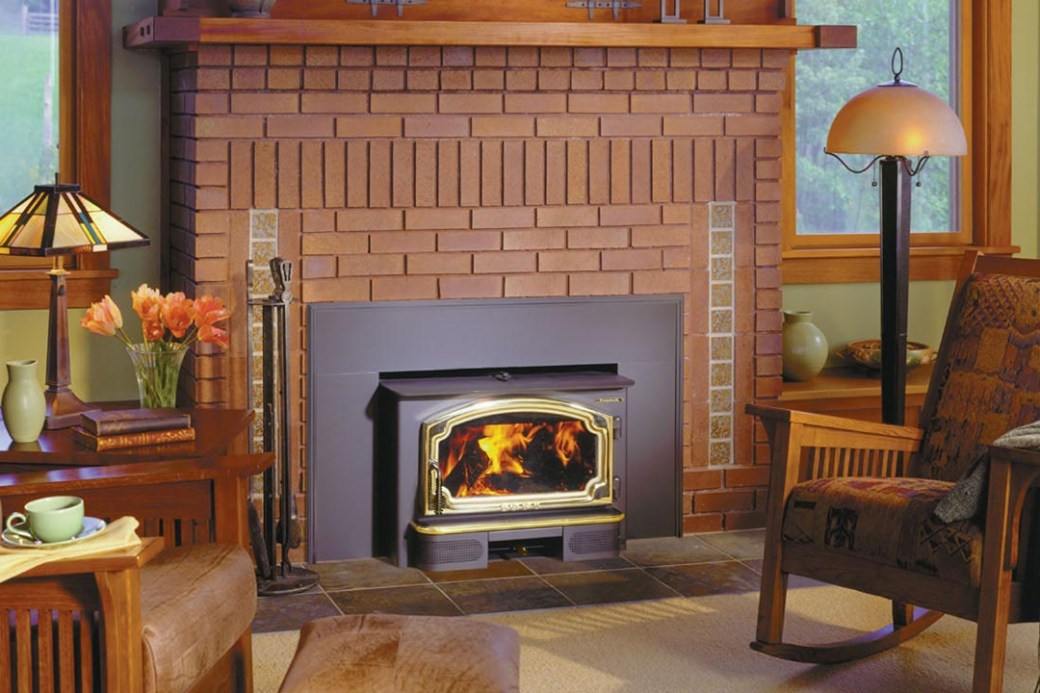

You might love the authentic crackle of the fire and the warm ambiance that fills your rooms. But that romantic hearth is costing you money. Almost all the heat generated by an open fire goes right up the chimney -- often as much as 90%.
The remedy? A wood-burning fireplace insert keeps the good vibes while driving down your energy costs.
What Is a Fireplace Insert?
An insert is a cast iron or steel box that fits inside your existing masonry fireplace opening. In essence, making it work much like a wood-burning stove.
A decorative flange fits around the outside edges so that no gaps appear between the unit and the sides of the fireplace. You’ll be required to install a chimney liner to carry combustion gases and smoke up through your chimney.
Fireplace inserts have clear, heat-proof glass doors. The best designs circulate air within the firebox in a way that helps keep the glass clean.
Inserts heat 1,000-3,000 sq. ft., depending on their size. You’ll want to size your insert to the square footage you need to heat.
Cost: $3,000-$4,000, including installation and a chimney liner.
How Much Energy Do Inserts Save?
You’ll cut your other heating costs by 10%-40% with an insert.
Because of the enclosed design, an insert increases the efficiency of burning wood, helping you extract the most heat for the least cost.
Most wood-burning inserts also include a fan to circulate the warm air around the firebox back into the room for even more efficiency.
Improvements in the designs of wood-burning fireplace inserts over the past few years mean almost all new units now meet the guidelines for fuel efficiency set by U.S. Environmental Protection Agency of 60%-80%.
3 Other Advantages of an Insert
- They can burn for three to five hours before you need to add wood.
- Firewood is an economical fuel in many regions, costing just $922/year to heat a typical home when the wood is burned efficiently. If you cut the wood yourself, it might even be free. If you buy, you support local jobs.
- Efficient combustion reduces the amount of noxious gases and particulates produced by an open fireplace.
Related: