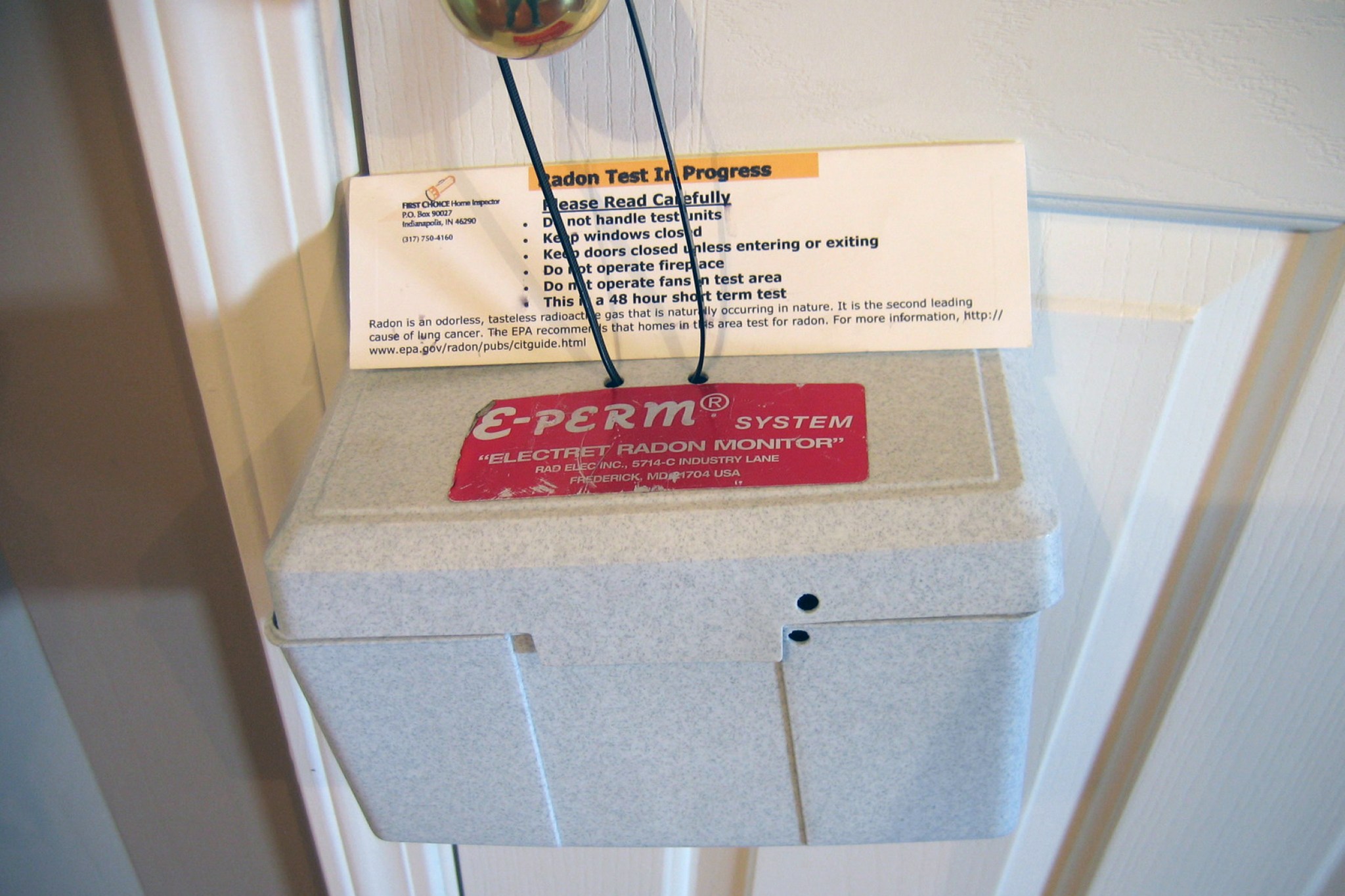

One in 15 homes has unacceptable radon gas levels and requires radon gas mitigation. To find out where your home ranks, radon test your basement, the main level, and the second story.
You can easily and accurately perform a test on your own, or hire a company to do the testing for you. Here’s what you need to know.
Radon Test: Levels to Look for
Radon is a naturally occurring, radioactive gas that’s emitted as uranium decays in water, soil, and rocks. In the open air, radon gas dissipates harmlessly. Allowed to seep into your home where it builds up, however, and it becomes dangerous.
Excessive radon levels may be found anywhere that your home contacts the ground, such as a first level on a concrete slab or in a basement—especially near sump pumps, cracks in the foundation, and gaps in framing.
If your test results indicate radon gas levels at or above 4 pCi/L (picocuries per liter of air), you’ll need to explore options for reducing radon gas. You can view a map of possible radon gas levels in your area.
Home Radon Test Kits
If you are radon testing to evaluate potential risk, a home test kit will do the job, says Brian Hanson, radon specialist at Kansas State University.
Look for test kits online or at home centers and hardware stores, with prices ranging from about $9 to $40. You can also contact your state radon office to find out if they offer a low-cost or free test kit.
Follow instructions carefully for use of the test kit. Typically:
- All doors and windows should be closed for 12 hours prior to testing.
- Place the detector in the lowest livable area of your home and leave it undisturbed for 48 to 96 hours.
- After the appropriate time period, immediately send the detector to its lab, which will deliver the results back to you.
Professional Radon Test
If you’re in the process of selling your home or want confirmation of radon levels detected by your home test kit, select a professional radon testing service. A testing service ensures that procedures are completed by an impartial professional who’s nationally- or state-trained and certified. To find a qualified company, contact your state radon office.
If testing is done as part of a home inspection, expect to pay an additional $150 above the home inspection cost. If you opt for a radon test separate from the home inspection, you’ll pay about $250 and up.
Counter Intelligence
Recently, it’s been noted that some types of granite countertops emit unacceptable levels of radon. You may want to test any areas of your home where stone countertops are present.