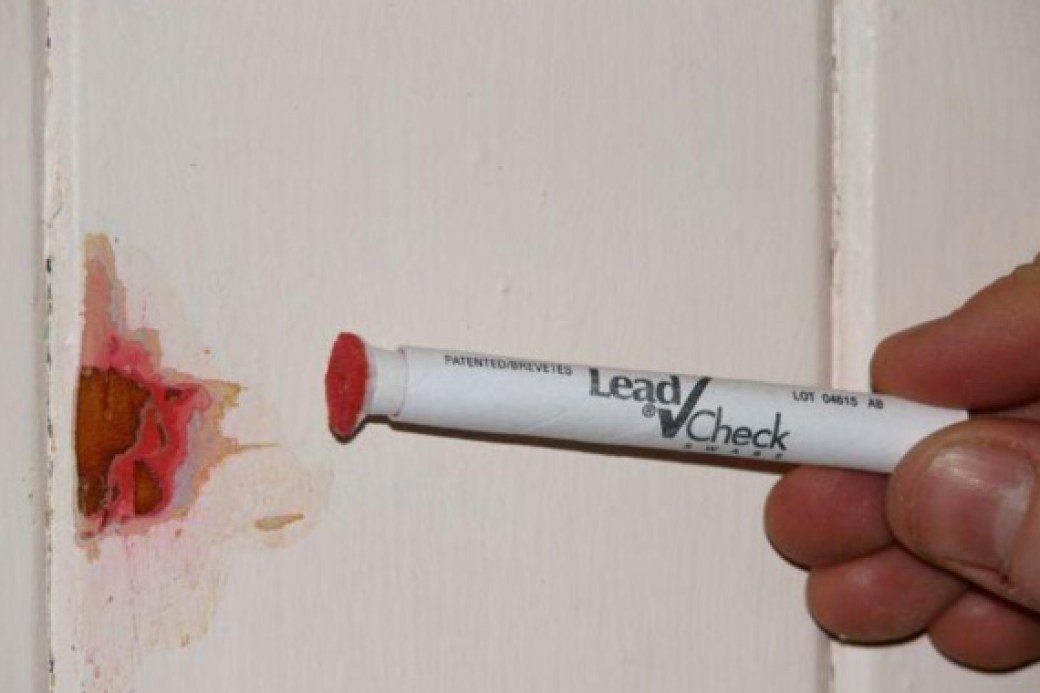

If you’re thinking of renovating your pre-1978 house, think carefully. Houses built prior to 1978 often contain lead-based paints, and the Environmental Protection Agency (EPA) has enacted strict laws to prevent toxic lead paint and residue from getting into the ground and water.
How do you know if your house is affected? Easy-to-use test kits, readily available at home improvement centers and hardware stores, let home owners and professionals to check for the presence of lead-based paints.
Lead Paint Testing Basics
1. Test any area of your house you plan to renovate. Pick a spot and carefully scrape away individual layers of paint so you can check every layer.
2. Test kits show results with changes to the color of the test strip or swab. If you’re color blind, be sure to have a friend confirm the results.
3. Test kits get results using either one of two chemicals--rhodizonate or sodium sulfide. For the most accurate reading, get a kit of each type.
Kits Suggested by the EPA
Due to some false negatives and false positives yielded by some kits during accuracy tests by the EPA, the agency recognizes only two DIY lead paint test kits that are available to home owners. In addition to judging these kits for accuracy, the EPA also looked for kits that were easy to use, produced rapid results, and were low-cost.
LeadCheck. Although you can use this kit to test a variety of surfaces for lead, the EPA recognizes it for its accuracy in testing wood and ferrous metal (alloys that contain iron).
Swab the surface to determine the presence of lead in just 30 seconds. If the swab tip turns pink or red, the test is positive for lead. No color indicates the absence of lead. Available at hardware stores or directly from the manufacturer, Hybrivet Systems, Inc (508/652-7881); the kit comes with eight swabs and costs about $25.
D-Lead. The EPA recognizes this kit for accuracy in testing wood, ferrous metal, drywall, and plaster surfaces for lead. In this kit, you collect a sample and add a pair of solutions for testing. If lead is present in the sample, the solution color changes in less than 13 minutes.
A kit containing six tests costs $35.
Other Easy-to-Use Kits
In recent tests, Consumer Reports rated these kits as “Easy to Use:”
Lead Inspector Test kit from Abotex (about $13)
First Alert Premium Lead Test Kit LT1 (about $10)
Homax Lead Check (about $8).