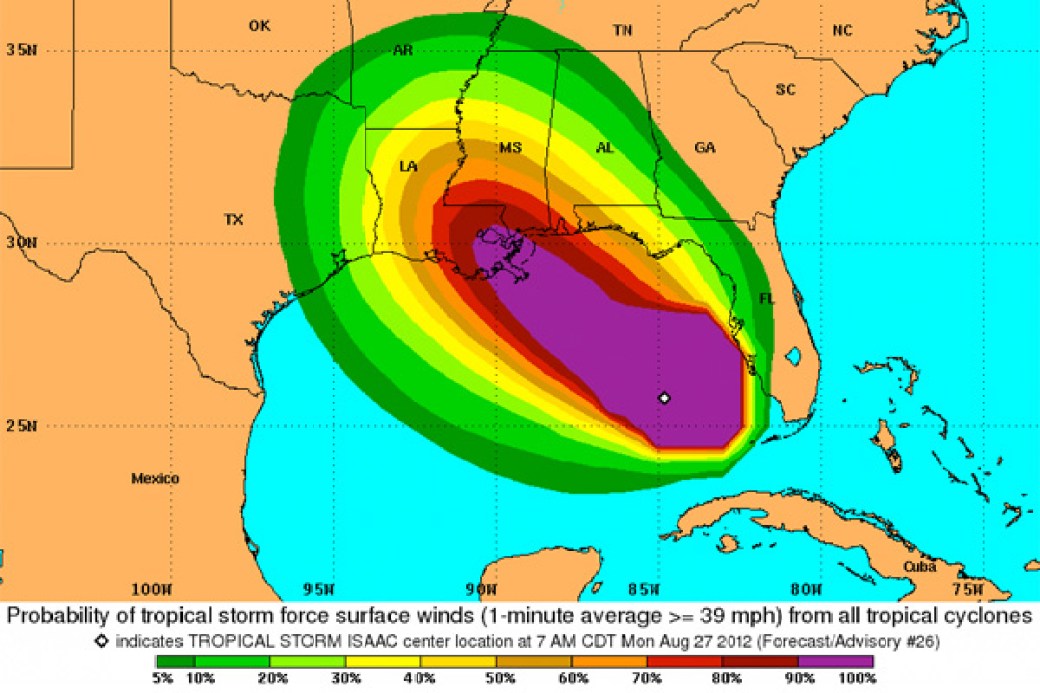

Whenever a hurricane approaches, everyone goes “category” crazy. Isaac (2012) was a Category 1 hurricane when it came ashore; Katrina (2005) was a Category 3 storm when it hit Louisiana; and Michael (2018) reached Category 5 when it smashed into parts of Florida.
What exactly is the difference between a Category 1 and 5; 2 and 4?
The National Hurricane Center has a nifty chart and animated graphic that shows you how each category on the Saffir-Simpson Hurricane Wind Scale would affect your well-constructed home:
Category 1 (74-95 mph winds)
Category 1 is the lowest category, but it’s still a whopper of a storm. You may have roof and siding damage. Large branches will break from older trees, and power outages will occur for a few or several days.
Tips: Make sure your home emergency preparedness kit is up to date; gas up your portable generator; and be ready to treat sick and storm-damaged trees.
Category 2 (96-110 mph)
In addition to roof and siding damage, expect downed trees to block roads and power outages to last from several days to weeks.
Tip: If a neighbor’s tree falls over your property line, do nothing until you call your insurance company, which will restore your property and then decide if you or your neighbor was at fault.
Category 3 (111-129 mph)
This is a devastating storm that could cause major damage or destruction, so you may have to repair or replace your roof, siding, and gutters. Forget about power for a couple of weeks, and you may either lose your county water supply or have to treat water before you drink it.
Tip: Fill bathtubs before the storm and use that that water to bathe and flush toilets.
Category 4 (130-156 mph)
You’ll probably be evacuated if a Category 4 hits your region, so you won’t have to watch the major structural damage your house will probably sustain.
Tip: This is the time to depend on the kindness of friends and family who may have a granny flat or in-law suite where you can stay while you assess and rebuild.
Category 5 (157 or higher mph)
This is a catastrophe. Even well-constructed homes could be reduced to timber.
Tip: This is why it’s essential to create a home inventory, so when you file an insurance claim, you know what you’ve lost. Before the storm hits, take your smartphone and video the contents of your home room by room.
Think you can ride out a hurricane? Check out this photo gallery of historic hurricanes, and you might change your mind.