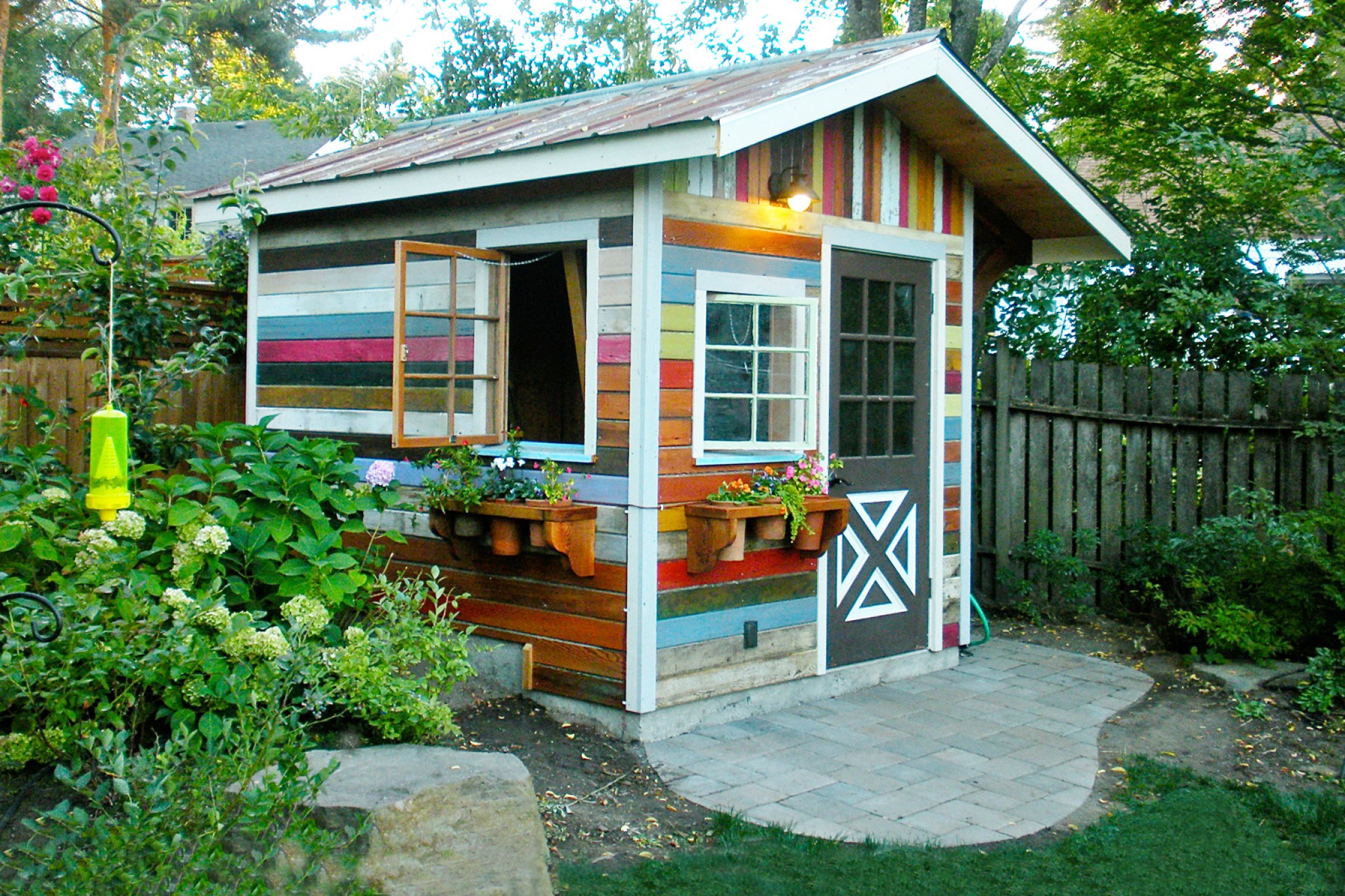

So long, storage shed.
Homeowners across the country are converting these sheds into tricked-out spaces to play, entertain, and work in — complete with drywall, paint, furnishings, and even utilities.
Kind of hard not to want one once you see one. Admit it, you're trying to figure out exactly where you'd put one, right? But are these picture-perfect livable sheds really worth your money and yard space? Here are a few questions and answers to help you figure that out.
Is the Cost of Building a Shed Worth It?
Let's cut to the chase: Real estate experts agree the value of a livable shed is in the eye of the beholder — and that doesn't necessarily translate into increased resale value.
"I'd put it in the category of a pool," REALTOR® Micki Sanderson says of livable sheds in her Amherst, Mass., market. Add one for your own enjoyment, but don't expect it to bring big bucks. She expects homeowners could recoup the cost to add electricity, but not plumbing, given the higher installation costs.
A shed's resale value is limited, in part, because they are considered "outbuildings" or "accessory structures." According to the American National Standards Institute's appraising standards, used in most parts of the country, these detached spaces — and even beautifully appointed guest houses — are not calculated into a home's "general floor area" of finished square footage.
But resale price is one thing. A great feature that helps seal the deal is another.
REALTOR® Diane Taillon in Ephraim, Wis., believes a livable shed can increase a home's desirability — if framed as the spectacular boon it is.
"It definitely, in my opinion, helps sell homes. It's an amenity that is so attractive," she says. Staging a gardening shed as a she-shed helped her sell one home, and just describing the potential of a junk-filled shed was enough to sell another.
Whether using it for working, reading, yoga, or artistic pursuits, a livable (or workable or playable) shed adds new functionality to your property to help you enjoy it more.
What Purpose Will Your Shed Serve?
Now that you know these vamped-up outbuildings probably aren't going to pay for themselves, you might still really want one. And that's when they offer the most value — when they make you happy.
Whether using it for working, reading, yoga, or artistic pursuits, a livable (or workable or playable) shed adds a new functionality to your home to help you enjoy it more, and use it more.
For artist Maria Varmazis, a studio shed provides an ideal sanctuary outside of her Boston home. Here, she can paint, make a mess, and not have to worry about cleanup before her cats find their way in — and it's made her more productive.
"I've been able to do more work than I hoped," Varmazis says. "Just having the studio there is motivation."
How Much Do Livable Shed Kits Cost?
A very basic 10-by-10-foot engineered wood kit from a home improvement store runs about $900. And if you're wanting things like extra windows, bigger doors, flower boxes, etc., you'll pay more. While that may sound affordable, there are additional expenses that aren't included.
What shed kits don't include:
- Permits
- Foundation and flooring
- Shingles
- Drywall
- Electricity
- Insulation
- Plumbing
- Installation if you're not DIYing it
A poured foundation will cost about $75 in materials, and if you hire someone to do it, they'll charge up to a $100 an hour.
Electrical materials will cost around $150 to run a line from your house to a shed 50 feet away. But unless you have this specific skill set, you'll need to call in an electrician. At $50 to $100 an hour, that brings the cost to $500 or more.
And if you're looking to trick out your shed with a wet bar or convenient bathroom? Plumbing is an even more costly addition, starting at $1,000 to $1,500 just to run the supply and drain lines.
Watch out for your local laws, too. There could be some costs there in the form of permits, the type of materials that are permitted, etc. If you fail to check off all the necessary boxes, you could receive a fine — or, even worse, be forced to undo some or all of the construction.
How Much Can Be DIYed to Save Money?
The kits make it easy for even the most novice DIYers to do some of the work, which will knock down labor expenses.
Varmazis and her husband handled the permits and DIYed the interior of their shed to save money. But they paid a crew to erect their shed's shell because they weren't confident they had the skills to do it well.
You, on the other hand, might be able to rouse your carpenter-savvy friends into an old-fashioned barn-raising, and then pay a pro to make the inside look really sweet.
Is Your Climate Suitable for a Shed?
If you live in a severely cold climate, be honest with yourself about whether braving the elements will deter you from using your shed, and what it might cost you to make it truly livable in terms of building materials and utility bills, says Sanderson.
It'll need a pitched roof as well as insulation, a source of heat and possibly double-pane windows to keep you from risking frostbite.
Also, know that most kits are built for more temperate climates. So if your home's in a frigid climate, it may be best to consult with a local vendor that knows what materials your shed needs to keep you "living" in it.
Related: 4 Spring Landscaping Ideas for People Who Hate Yard Work